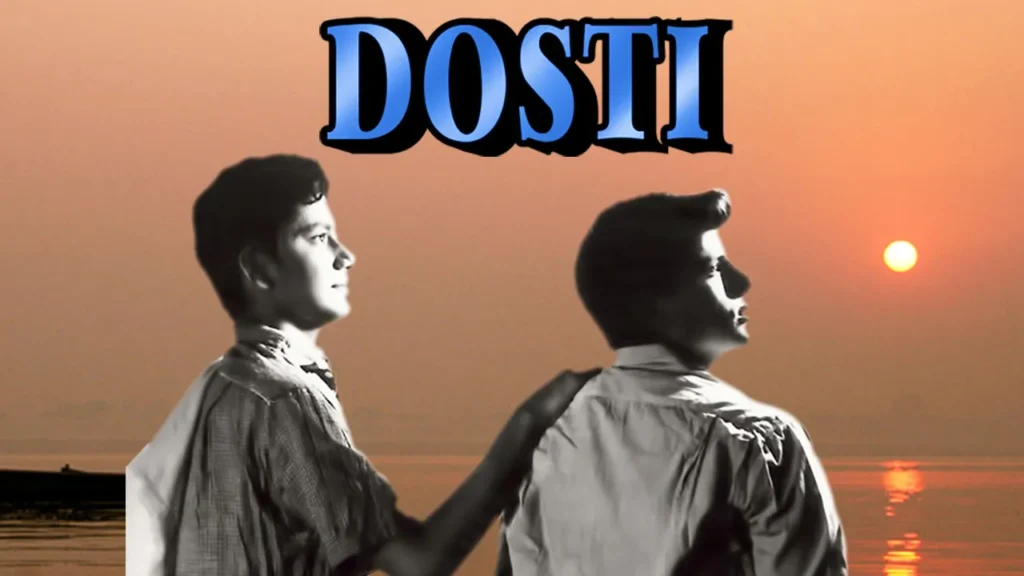
When we think of films that celebrate friendship, Dosti (1964) is often remembered as a masterpiece that beautifully depicts the power of human connection. Dosti, directed by Satyen Bose and produced by Tarachand Barjatya, is a timeless film with an emotional impact on its viewers. The film follows the narrative of two boys, Ramu (Sudhir Kumar Sawant), who is blind, and Mohan (Sushil Kumar Somaya), who is physically challenged. Despite their difficulties, their link becomes a source of hope, compassion, and the purest form of friendship.
At the center of it, Dosti is about two boys from very different worlds who create an unshakable relationship. Ramu, who is visually impaired, and Mohan, who has physical limitations, embark on a journey to discover what it means to genuinely understand and assist another person. Their friendship develops from their shared sorrow and understanding of each other’s challenges, resulting in a strong and real emotional bond.
The story is not dependent on large-scale plot twists or dramatization. Instead, it takes a simple yet effective approach, focusing on the lads’ daily struggles. Their story exemplifies how even modest gestures of kindness, trust, and support can help people overcome adversity. It’s a story of survival and, more significantly, human connection in the face of hardship.
One of the reasons Dosti resonates with such depth is that its most significant performers deliver remarkable performances. Sudhir Kumar Sawant as Ramu delivers a raw, honest portrayal of a blind youngster who refuses to let his affliction define him. His awareness of his environment, along with his emotional depth, creates a character who feels genuine and empathetic. Sushil Kumar Somaya as Mohan incorporates the same commitment to his part, portraying a physically challenged youngster who refuses to give in to his condition. Their chemistry is what elevates the film. Ramu and Mohan’s friendship feels genuine, and it serves as the film’s emotional backbone.
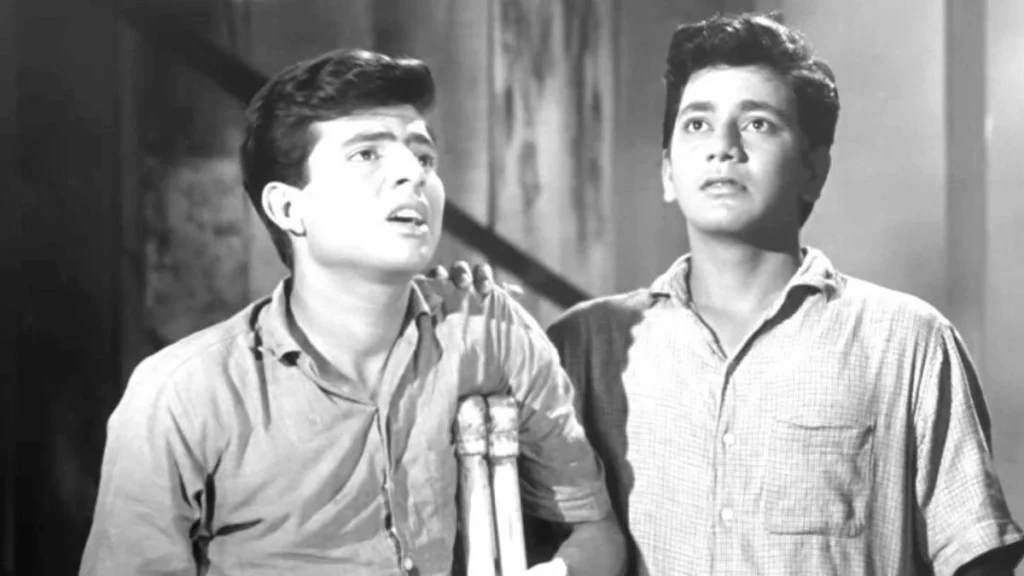
Satyen Bose’s direction in Dosti is complex and sympathetic. He refrains from exaggerating the characters’ hardships or employing heavy-handed dramatization to generate emotion. Instead, he concentrates on the characters’ emotional journeys, making it possible for their personal development to occur spontaneously. The tempo is consistent, and the picture never feels rushed or stretched.
The cinematography, while modest, effectively supports the plot. It emphasizes the boys’ simple existence, capturing moments of joy and sorrow in small, intimate settings. The framing is real and grounded, allowing us to feel close to the individuals and their challenges. Whether it’s a moment of laughing between Ramu and Mohan or a somber scene in which they share a dream, the images complement the film’s primary themes of love, resilience and friendship.
Shankar-Jaikishan’s soundtrack for Dosti contributes significantly to the film’s emotional impact. The title track, “Dosti,” is a classic anthem that has become associated with the concept of friendship in Indian cinema. It’s a song that perfectly expresses the spirit of the film—loyalty, camaraderie, and the unshakable link between friends.
Other compositions, such as “Kahin Se Aayegi” and “Tera Mujhse Hai Pehle Ka Naata Koi,” enhance the film’s plot with melodies that express nostalgia, longing, and tenderness. The music is more than just a background element; it is a character in and of itself, heightening the emotional depth of the picture and emphasizing the characters’ poignant moments.
Dosti is a film about friendship and the societal challenges that individuals with impairments confront. It emphasizes how society frequently looks down on people who are disabled, while also emphasizing the idea that friendship and love transcend physical constraints. The film portrays Ramu and Mohan as people who, despite their impairments, are full of strength, hope, and promise. Their friendship exemplifies the strength of human connection, and the film underlines that the best gifts in life are often the most basic: understanding, support, and love.
The film also quietly addresses problems of society’s indifference and judgment. People look upon the guys with sympathy, yet they keep moving forward, relying on one another. Dosti demonstrates that, despite society’s harshness, there is always hope in the generosity and loyalty of a good friend.
Even decades after its theatrical release, Dosti is still one of the most beloved films in Bollywood history. Its universal themes of friendship, love, and resilience are as pertinent today as they were when the film originally came out. The film continues to inspire audiences with its straightforward yet meaningful depiction of two boys who, despite their limitations, find courage and joy in each other’s presence.
In a world that can often feel isolated, Dosti serves as a timeless reminder that no one is truly alone when they have a companion by their side.
Leave a Reply